
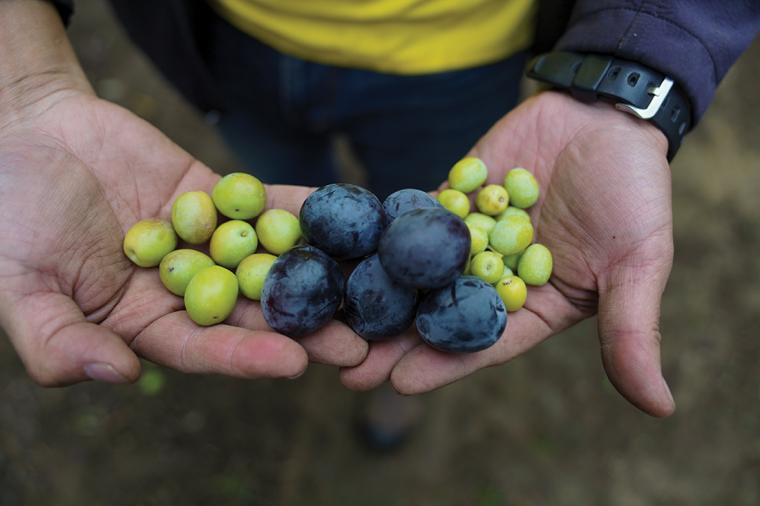
For generations, California agriculture has been synonymous with abundance – with a climate that allows for 400 different agricultural commodities. Vast orchards and growing spaces, processing facilities, research institutions and distribution networks have made the state a global agricultural powerhouse, and one that sets the national standard, accounting for $61.2 billion in production (2024).
In today’s economic climate, however — shaped by trade uncertainty, geopolitical tensions, labor shortages, climate pressures and shifting supply chains — agriculture is no longer simply about production volume. It is about resilience.
Increasingly, resilience is being engineered in the Greater Sacramento region. What was once viewed primarily as a production corridor is now emerging as a laboratory for the future of food.
This piece explores the region’s market strengths, and how it remains at the forefront of the national dialogue through a wave of new tariffs and supply chain challenges.
Agriculture Has Entered a New Economic Era
Across the globe, agriculture has become deeply intertwined with geopolitics. Tariff disputes, retaliatory trade measures and broader economic fragmentation are reshaping how nations think about food security and supply-chain independence. In the U.S., ongoing tariff volatility has created new pressures across agricultural imports, processing inputs and commodity pricing.
For American agriculture, the implications are profound. Food processors and growers are increasingly being forced to answer difficult questions:
- How can operations become less dependent on overseas inputs?
- How can companies process food closer to production sources?
- How can the U.S. scale domestic innovation fast enough to maintain competitiveness?
Sacramento is uniquely positioned to answer those questions. Situated at the center of California’s fertile central valley, the region combines world-class research capacity, deep processing infrastructure, global logistics access and a rapidly growing innovation ecosystem.
The region is home to 200-plus food processing businesses including industry leaders like Pacific Coast Producers, Nippon Shokken, Blue Diamond Almonds and Sunsweet, alongside a growing network of companies specializing in precision agriculture, biological crop science, cold-chain logistics and food manufacturing innovation.
Anchored by research leadership from University of California, Davis, the region has become a nexus for almonds, walnuts, tomatoes, rice, wine grapes, dairy innovation and next-generation food technologies.
The real differentiator is not simply output. It is convergence.
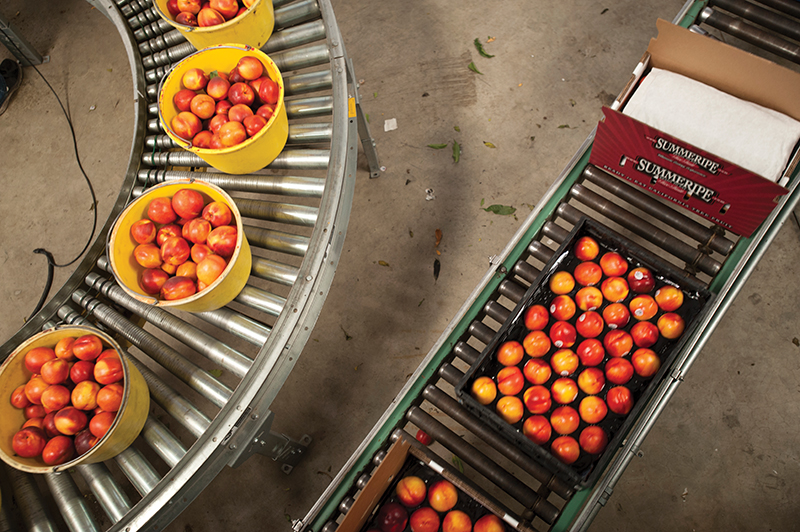
Where Agriculture Meets Research and Technology
The Sacramento region sits at the intersection of agriculture, life sciences, clean technology and advanced manufacturing. That convergence is helping transform traditional farming into a data-driven, technology-enabled industry (including farm robotics) capable of adapting to modern global pressures.
At the center of that ecosystem is UC Davis, widely regarded as the nation’s top agricultural sciences institution. The university continues to serve as a critical talent and research engine for the region, producing breakthroughs in plant science, water efficiency, seed genetics, microbiome research and food innovation.
UC Davis is among the most published and cited U.S. research universities in agricultural, environmental, food and soil sciences. The institution has more than 2,300 acres devoted to agricultural research and teaching (alongside the world’s largest and most productive grapes and wine R&D program).
That UC Davis-influenced talent density matters because agriculture today increasingly resembles a high-tech sector.
Modern food systems depend on automation engineers, software developers, robotics specialists, climate scientists and biotechnology researchers just as much as they depend on growers. In the Sacramento region, companies are responding accordingly.
Global agricultural leaders such as Bayer Crop Science, BASF, Syngenta, HM.CLAUSE, novonesis, SAKATA and Corteva Agrisciences maintain research and development operations in the region. Food-processing leaders including the aforementioned Blue Diamond, Pacific Coast Producers, Kikkoman and Sunsweet continue to expand sophisticated manufacturing and processing capabilities throughout the area.
Meanwhile, emerging startups are helping redefine the industry entirely. Companies focused on farm robotics, alternative proteins, precision irrigation and biological crop protection are building next-generation solutions in Sacramento precisely because the region offers direct proximity to growers, processors, researchers and commercialization partners and restaurants, across the industry supply chain. Notable companies include Oobli, California Cultured, Biome Makers and Pheronym, among others.
The region’s proximity creates something rare in economic development: a fully integrated innovation ecosystem. Many regions excel either at research or large-scale food production and processing. Sacramento is increasingly doing both.
Tariffs and Supply Chains Are Reshaping the Industry
The importance of that model becomes even clearer amid ongoing global trade disruptions. Recently implemented tariffs and geopolitical tensions have exposed vulnerabilities across the food supply chain, particularly for agricultural inputs, fertilizer access, food ingredients and imported processing materials.
Those pressures are accelerating a broader shift toward regionalized production and domestic processing capacity. Essentially, companies now want to manufacture and process food closer to where it is grown. They want shorter supply chains, faster transportation routes and reduced geopolitical exposure. They also want access to innovation that can improve efficiency amid rising labor and operational costs.
Sacramento is at the epicenter of much of that activity. The region’s strategic location provides direct access to California’s sprawling agricultural production base, while also connecting companies to West Coast ports, interstate freight corridors and major consumer markets. At the same time, Sacramento offers a significantly lower cost structure than many coastal California metros (it is 40 percent more cost-effective than the Bay Area). This is an increasingly important factor as food manufacturers evaluate expansion opportunities.
Importantly, Sacramento also retains something many regions have lost: room to grow. As industrial land shortages constrain expansion opportunities in other markets, Sacramento continues to offer scalable, high-power sites capable of supporting large food-processing, cold-storage and ag-tech manufacturing operations. It features major industrial parks such as Metro Air Park, McClellan Park, Power Inn, Placer One and others.
In a period where reshoring and domestic production have become national economic priorities, that capacity matters enormously.
Sacramento’s Agricultural Identity Is Evolving
The region’s momentum is already becoming more visible outside the market – evidenced by the nationally recognized launch of UC Davis’s sprawling “Aggie Square” campus in 2025, which is dedicated in part to food-tech innovation.
Further, California Food Processing Expo, which is one of the country’s largest food-processing industry events, continues to convene in Sacramento (as does the food conference Terra Madre), bringing together processors, growers, suppliers, universities and government leaders focused on advancing the future of food production.
Additionally, two grocery retail leaders, Raley’s and Nugget Markets, have their headquarters in Greater Sacramento, offering companies a direct line to bring their products to market.
The region is also owning its role as a startup incubator – particularly through a new angel network rooted in the UC Davis and Greater Sacramento ecosystem, designed to invest in early-stage companies at the intersection of food, health and medicine. Its “Food & Health Angels” initiative pairs capital with deep operator expertise to drive scalable impact.
Of course, this increased visibility reflects a broader reality: Sacramento is no longer simply participating in the agricultural economy; it is helping redefine it.
The industry’s future will not be built solely through larger farms or higher commodity output. It will be built through smarter systems – those that can conserve water, reduce waste, stabilize supply chains, improve yields and respond more dynamically to geopolitical and environmental disruptions.
Today, California’s climate challenges are accelerating that necessity. Water scarcity, extreme weather and sustainability demands are forcing agricultural producers to innovate faster than ever before. That pressure, while significant, is also creating enormous economic opportunity for regions capable of commercializing agricultural technology at scale.
Sacramento has proven it can be that engine. Precision irrigation companies are developing sensor-based systems that help growers optimize water usage. Robotics firms are improving harvesting and processing efficiency. Food-science innovators are creating new plant-based proteins and alternative food products designed to meet changing consumer demand. Researchers are advancing biological crop-protection technologies that reduce environmental impacts while improving productivity.
None of this is theoretical activity: it is deployable infrastructure designed to meet the challenges of today’s global economy.
As one proof point, Sacramento is leading in ingredient/product innovation – largely tied to the massive amount of crops and waste streams being produced in-state, which gives companies a leg up, and the opportunity to develop high-end food options.
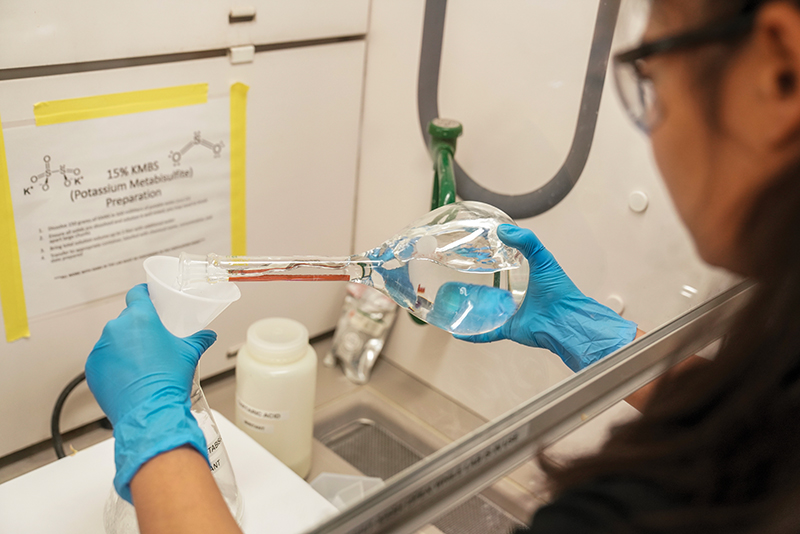
Why Domestic Food Innovation Matters More Than Ever
Perhaps most importantly, the region is also positioned to help solve one of the defining economic challenges of the 2020s: how to produce more food with fewer resources (all amid rising global instability).
That challenge extends well beyond California. Global population growth, supply-chain fragmentation and increasing trade disputes are forcing countries to reconsider how food systems operate. Nations that once prioritized low-cost globalization are now prioritizing domestic resilience and strategic production capacity.
The regions that succeed moving forward will be those capable of integrating research, production, logistics and processing into cohesive ecosystems. They will be regions that understand agriculture not as a legacy industry, but as an advanced technology sector with global strategic importance.
For Sacramento, its strength is not simply that it grows food. Many places do that. It is that the Capital Region is building the technologies, talent pipelines and industrial infrastructure that will define how food is grown, processed and distributed in the future.
That distinction matters enormously. In today’s volatile geopolitical climate, domestic agricultural innovation is no longer a regional economic priority. It is tied to America’s long-term competitiveness and resilience. The ability to grow, process and distribute food efficiently – while developing technologies that allow for this optimization – will help determine which regions and nations lead the global economy for the rest of the century.
For generations, the U.S. was the gold standard in agricultural productivity. Its next chapter will depend on how intelligently the country grows and distributes its food. Increasingly, Greater Sacramento – which stretches from the capital city to the Sierra Nevadas – is demonstrating what that future can look like.
It is a region where research, manufacturing, logistics and agriculture are converging to build a more resilient domestic food economy. In an era of economic uncertainty and realignment, that model may prove more important than ever. T&ID
Related Agencies
About the Author