

Home to more than 30 Fortune 500 companies and a GDP topping $1.2 trillion, Illinois has established itself as one of the world’s premier business destinations. That strength isn’t confined to one industry or one city. It runs deep across sectors — from the defense corridors of the Metro East and the Quad Cities and the agribusiness heartlands of Central and Southern Illinois to the automotive manufacturing hubs of Chicago and Rockford.
From quantum and life sciences to transportation, distribution and logistics, Illinois’ economy is broad and dynamic. Aerospace and defense, next-generation agriculture and food processing and automotive and advanced manufacturing illustrate that Illinois offers a competitive environment for companies looking to scale and innovate.
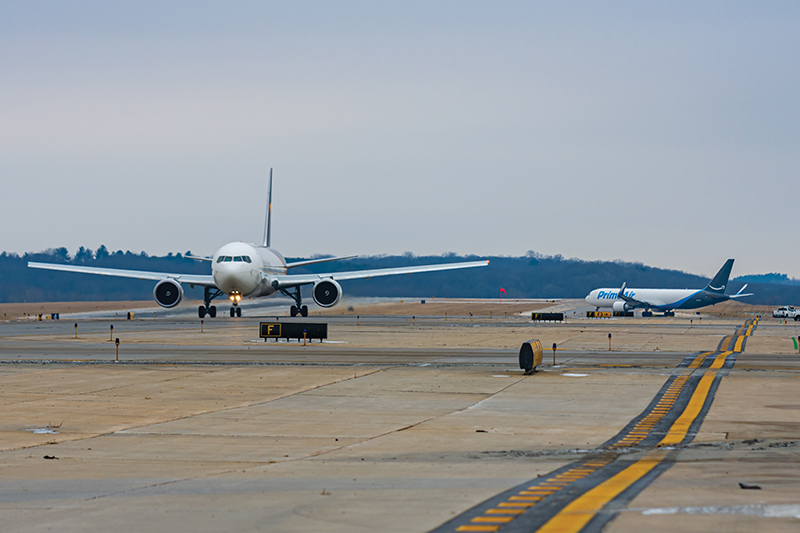
Photo by Shutterstock
Aerospace and Defense Takes Flight in Illinois
Illinois has long been home to a formidable aerospace and defense ecosystem, providing innovators with the talent, connectivity and industrial strength to grow. Today, the state's defense and security cluster encompasses nearly 19,000 companies employing approximately 236,000 workers, generating $40.6 billion annually (the most in the Midwest).
One Illinois-based company that stands out for its ability to adapt and thrive within the rapidly evolving defense and aerospace sector is AAR CORP, which celebrated its 70th anniversary in 2025. With humble roots as a small Chicagoland radio equipment dealer, the company has grown into North America’s largest independent maintenance, repair and overhaul (MRO) provider. Its Rockford MRO facility, launched with roughly 35 employees in 2016, now employs 400 technicians, many of them trained through a fellowship partnership with Rock Valley College supported by the Illinois Department of Commerce and Economic Opportunity (DCEO).
The state's advantages for aerospace and defense companies are structural as well as institutional. Illinois is home to three major active-duty military installations and three National Guard operations, including Naval Station Great Lake — the Navy's only boot camp — and Scott Air Force Base, headquarters of U.S. Transportation Command, recording a $12.9 billion annual economic impact.
Rock Island Arsenal, strategically located on the Mississippi River, employs 6,000 service members, civilians and contractors. These installations create a dense ecosystem of contractors, suppliers and skilled veterans flowing into the private sector workforce.
Logistically, few states can compete. Chicago O'Hare remains the most-connected airport in the United States, while Chicago Rockford International ranks among the fastest-growing cargo airports globally. For manufacturers reliant on precision supply chains and rapid delivery, that infrastructure is a decisive competitive advantage.
Illinois also holds the unique distinction of being the only state where all six Class I railroads converge in two separate locations: Chicago and the Metro East.
Where Innovation Takes Root
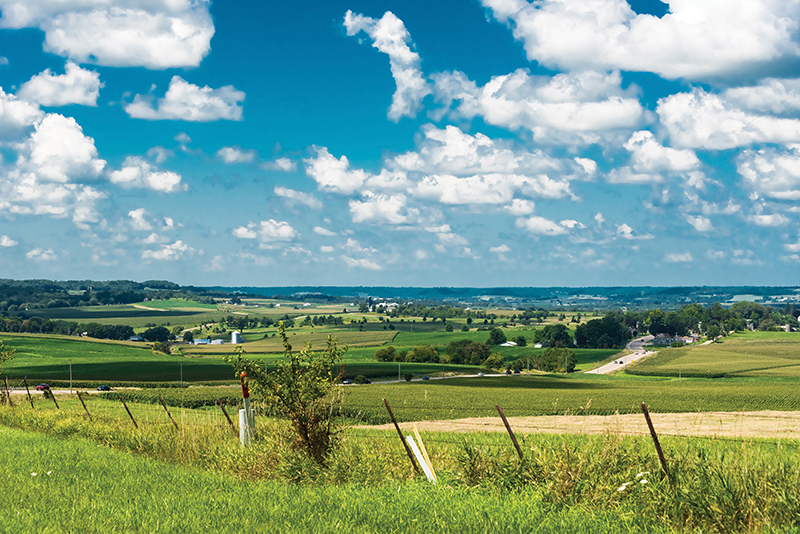
Illinois sits at the center of American agriculture, both literally and economically. The state is the nation's top producer of soybeans, second-largest producer of corn and third-largest exporter of agricultural commodities, shipping more than $11 billion worth of goods to global markets annually. But what distinguishes Illinois is not just scale, but its sophisticated ecosystem coupled with its strong agricultural foundation.
The state ranks first in the Midwest and third in the nation for agribusiness GDP at $38.9 billion, with nearly 200,000 workers employed across the sector.
It leads the U.S. in private food manufacturing research and development, holds the second-highest total of food-related patents and hosts the second-largest food processing cluster in the country, with a gross regional product of $15.2 billion. More than 2,100 food processing and manufacturing facilities operate across Illinois, giving the state a top-five ranking nationally.
Companies including Archer-Daniels-Midland, Kraft Heinz, Mondelēz International, McDonald's, Conagra and Ingredion have all built significant operations in the state, drawn by a combination of feedstock proximity, logistics infrastructure and a talent pipeline that graduates more agriculturally skilled students than any other Midwestern state.
The intersection of agriculture and biotechnology is also ripe with opportunity. Backed by a $51 million federal Economic Development Administration Tech Hub grant and a combined commitment of $680 million from public and private partners, the Illinois Fermentation and Agriculture Biomanufacturing (iFAB) Tech Hub is positioning Illinois as a global leader in precision fermentation and biomanufacturing. Located within the heart of corn and soy production and connected to global markets through the same rail, river and road network that moves grain to port, iFAB is designed to accelerate the commercialization of next-generation food and agricultural technologies — from industrial chemicals and food ingredients to alternative proteins, functional materials and textiles.
Automotive and Advanced Manufacturing: Modernizing a Legacy
No sector better illustrates Illinois' dual identity — industrial heritage and forward-looking ambition — than advanced manufacturing. The state is home to more than 582,700 manufacturing workers (a workforce 18 percent more concentrated than the national average), generating nearly $140 billion in annual economic output.
The automotive sector is a particular point of strength. Illinois is home to more than one million workers with skills applicable to automotive manufacturing, the fifth-largest automotive employer ecosystem in the country, with a workforce concentration 19 percent above the national average. Major names including Ford, Stellantis, Rivian and Caterpillar have a significant presence in the state, alongside a robust network of suppliers.
One shining example is electric vehicle pioneer Rivian. Drawn to the region for its exceptional talent base, centralized location and supportive business environment, Rivian established its manufacturing base in Normal nearly a decade ago. Since setting up shop, the company has made significant investments in Normal, including expansions to produce the R2 model and establish an adjacent 1.2 million square-foot supplier park.
The momentum is statewide. For decades, Continental has been producing tires in Mount Vernon, in the southern part of the state, at its largest plant in the U.S. Next year, Continental plans to meet growing North American demand for its products by opening a highly automated finished goods warehouse so large it could fit six football fields.
In the Chicago metro area, Hyundai Translead is investing $450 million in not one, but two, trailer manufacturing facilities. It’s a strategic investment, with Will County chosen for its workforce, ideal location and ability to strength supplier access.
Investing in programs like the Manufacturing Illinois Chips for Real Opportunity (MICRO) Act, the Reimagining Energy and Vehicles (REV) Illinois program for EV and clean energy manufacturers and workforce training pathways, the state is committed to expanding opportunities for home-grown talent and growing companies alike. In early 2026, Governor Pritzker announced $24 million for six new Manufacturing Training Academies at community colleges across downstate regions, building on the state’s tremendous community college system, the third largest in the nation.
For manufacturers, the logistics case is as strong as any in the country. Illinois' 2,185 miles of interstate highway, 19 public port districts that offer direct links to the Atlantic Ocean, Great Lakes and Gulf of Mexico and the second-largest number of miles of freight railroad, mean that moving goods — domestically or internationally — is faster, cheaper and more reliable in Illinois. T&ID
Related Agencies
About the Author