
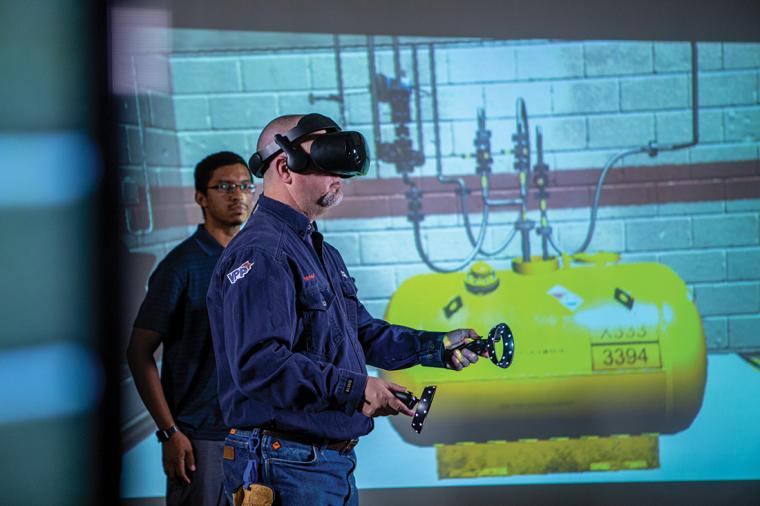
Legacy strengths sharpened by new technologies, modern infrastructure, and strategic vision.
Louisiana’s economic identity has long been shaped by the meeting of land and water. Along the lower Mississippi River and deep into the Gulf, the state sits at a crossroads of inland commerce and the global marketplace, where barges drift through predawn mist, cargo cranes rise from the banks and ships trace the river bends toward international markets.
For generations, geography provided a natural advantage. In recent years, that ever-strong, enduring landscape has converged with innovation, policy alignment and long-range planning, creating conditions that industry analysts say help draw some of the most significant industrial commitments in the country.
What is increasingly clear is that Louisiana’s momentum rests on the interaction of several core strengths rather than any single asset. Geography offers the starting point, but the state’s vast network of deepwater ports, nearly 50,000 miles of pipelines, Class I rail connections and industrial corridors have grown into an equally powerful force. Strategic initiatives that identify priority sectors and direct resources toward their expansion have strengthened this foundation. The result is a climate where legacy industries continue to scale, new technologies find room to grow and major companies see an uncommon degree of integration across energy, logistics and manufacturing.
Legacy Energy Meets New Possibilities
Energy remains the most visible pillar of Louisiana’s industrial activity, and recent announcements underscore the magnitude of the state’s role. Since 2018, more than $133 billion in energy-related projects have been announced, spanning oil and gas, liquified natural gas (LNG), hydrogen, nuclear power, biofuels and carbon capture.
Much of this activity builds on longstanding strengths. Louisiana’s 15 refineries process nearly three million barrels of crude oil per day. The Louisiana Offshore Oil Port remains the nation’s only deepwater oil port and a central entry point for imported crude. Two of the four sites in the Strategic Petroleum Reserve sit on Louisiana soil, reinforcing the state’s importance to national energy security.
Liquefied natural gas has become a defining feature of Louisiana’s modern landscape. More than 60 percent of the United States’ LNG is exported from the state, supported by four major facilities already in operation and several more advancing through development.
Woodside Energy’s $17.5 billion investment in southwest Louisiana, the largest single foreign direct investment in the state’s history, and Venture Global’s planned $18 billion expansion in the southeast region reflect global demand and confidence in Louisiana’s workforce and infrastructure.
Hydrogen activity is also accelerating. More than $20 billion in private hydrogen investments have been announced. Statewide efforts such as the H2theFuture initiative and the HALO Hydrogen Hub partnership with Arkansas and Oklahoma are fueling this growth.
Academic institutions including Louisiana State University, University of Louisiana Lafayette and McNeese State University are adding programs to prepare technicians, engineers and researchers for an evolving energy sector.
Nuclear energy continues to supply a steady share of the state’s power. Entergy Louisiana’s two nuclear plants generate 12 percent of statewide electricity and provide carbon-free energy to more than 827,000 homes. Agriculture also contributes to the state’s renewable footprint. Louisiana’s wood biomass facilities produce 1.3 million tons of pellets annually, nearly 10 percent of total U.S. output, supported by feedstocks such as timber, sugarcane, corn and soybeans.
Together, these developments demonstrate the breadth of Louisiana’s energy leadership and the way modern infrastructure and coordinated planning have created a diverse, interconnected energy landscape.
Logistics Built for Scale
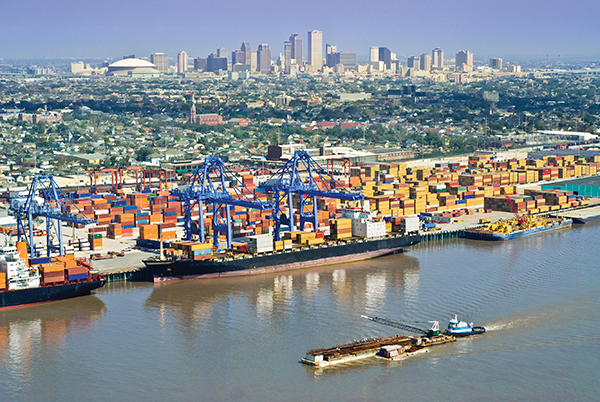
If energy is one engine of the state’s momentum, logistics is the other. Louisiana’s rivers, ports, rail lines, highways and pipelines form a multimodal system capable of moving high volumes of goods reliably and at international scale.
The Mississippi River anchors the system. As one of the world’s busiest commercial waterways, it links inland producers to global markets. Deep draft ports along the river and the Gulf Coast handle a wide range of cargo, including LNG, petroleum products, chemicals, grain, metals and manufactured goods. These ports have invested heavily in modernization. Expanded berths, upgraded container facilities and digital logistics platforms are designed to accommodate rising shipping volumes and larger vessels.
Pipeline infrastructure strengthens this network further. Nearly 50,000 miles of pipelines move crude oil, natural gas, industrial gases, feedstocks, refined product and carbon dioxide across the state. The Henry Hub, located near Lafayette, serves as the pricing point for North American natural gas futures, reinforcing Louisiana’s role in energy distribution and market stability.
The state’s extensive railways add additional reach. Louisiana is one of two locations in the country where all six Class I railroads converge, and the only place where they meet at a deep draft port. That means that these rail lines are a direct connection to major U.S. population centers and industrial markets. They also move chemicals, agricultural goods, fuels, construction materials and manufacturing components, and they connect seamlessly with Louisiana’s ports and pipeline systems.
The Supply Chain Ecosystem Behind Major Investment
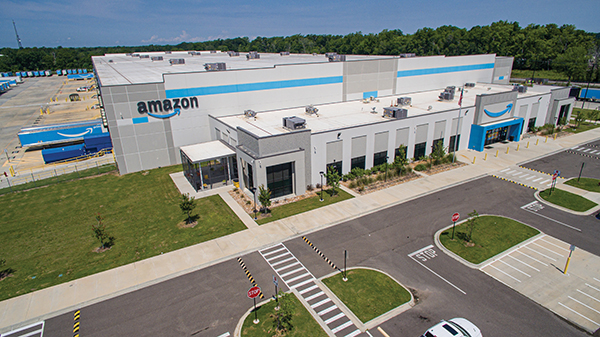
Beyond the movement of goods, Louisiana maintains an industrial ecosystem capable of supporting large and complex operations. Manufacturing facilities produce components for ships, offshore platforms and pipelines. Petrochemical plants create materials used around the world, benefiting from proximity to feedstocks and affordable industrial energy.
Agriculture plays a significant role in this ecosystem. Timber, sugarcane, corn and soybeans supply renewable fuel markets and value-added production. Louisiana’s wood pellet industry, which produces 1.3 million tons annually, contributes to global biomass markets and strengthens rural economies.
Offshore and maritime operations depend on a wide range of service providers. Vessel operators transport crews and equipment, catering and medical teams support offshore personnel and engineering and construction firms maintain and develop pipelines, terminals and coastal infrastructure.
Workforce development is the common thread connecting these sectors. Louisiana’s labor pool reflects generations of experience in manufacturing, maritime operations, logistics and energy production. Universities and technical colleges continue to expand training programs in hydrogen technologies, nuclear power, advanced manufacturing and supply chain management. These programs help ensure workers are prepared for both current and emerging industries.
Recent investments from Woodside Energy, Venture Global, CF Industries and others illustrate the strength and reach of this ecosystem. Louisiana’s consecutive Green Shovel Awards in 2024 and 2025 highlight the state’s leadership in energy innovation and job creation.
Positioned for the Next Era
Louisiana’s recent momentum is the product of geography, infrastructure and deliberate planning converging at the right time. As global demand increases for energy, integrated logistics networks and resilient supply chains, more companies are looking toward locations capable of supporting large-scale activity. Louisiana has become one of those locations.
Major industrial announcements in recent years suggest that companies recognize the value of these assets and are acting on them. As markets shift and new technologies emerge, Louisiana’s long-established trade routes, modernized industrial corridors and expanding energy capabilities position the state to maintain and grow its role in national and international commerce.
Louisiana’s future, much like its past, is tied to the movement of ideas, goods and energy along the rivers, rails and coastlines that define its landscape. Today, those long-standing advantages are strengthened by new investment and a broader strategic vision, creating an environment where Louisiana’s industrial presence is positioned to grow for years to come. T&ID