
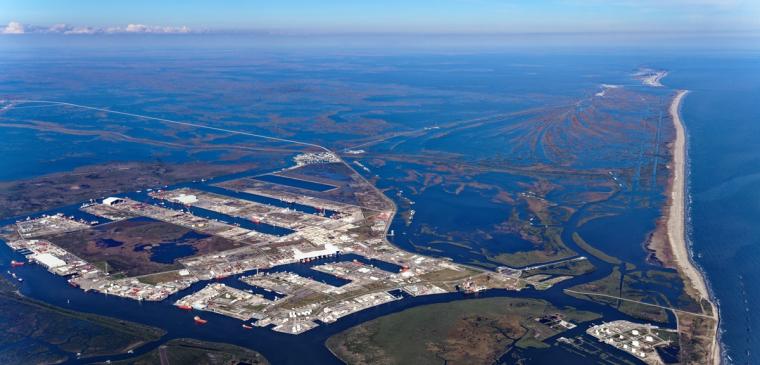
When it comes to access and business in and around the Gulf of America, the real estate maxim “location, location, location” is key. And that’s exactly what Port Fourchon provides.
“Our calling card is our great location,” says Chett Chiasson, Executive Director of the Greater Lafourche Port Commission and Port Fourchon, situated about 100 miles south of New Orleans. “The location of our port, related to the Gulf, is ideal.”
That’s certainly borne out by the more than 140 companies that utilize Port Fourchon as a base of operations for cost-effective service of offshore activity, repair and refurbishment, as well as shipping. And the impact the port has on this country’s economy can’t be overstated. Data indicates that the port has a daily impact of $46 million to the energy industry and $500 million daily impact on the national GDP.
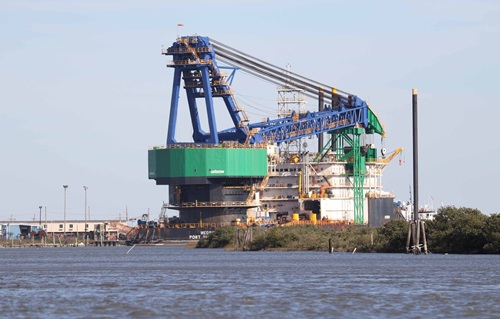
Port Fourchon currently services 100 percent of the Gulf’s deepwater energy production, furnishing the U.S. with about 15 percent of its entire oil supply.
Each day, over 270 large supply vessels traverse the port’s channels, and up to 1,000 trucks travel in and out of the port.
Each month, about 15,000 people are flown to offshore locations supported by Port Fourchon.
In addition, Port Fourchon is the land base for and connected by pipeline to the Louisiana Offshore Oil Port (LOOP), located 18 miles off the coast and the only U.S. deepwater port able to offload Very and Ultra Large Crude Carriers. LOOP handles 10 to 15 percent of the nation’s domestic oil, up to 15 percent of the nation’s foreign oil, and is connected to half of all U.S. refining capacity.
Consistent Growth
Of course, growth and development has been key for the port ever since it was founded in 1960, when a state senator pushed legislation to create the Greater Lafourche Port Commission and “Fourchon City” (which became Port Fourchon), originally to take advantage of the banana trade.
Decades of building infrastructure and dredging channels followed, and each year, more businesses added facilities to the port, including for logistical support and services needed for deepwater energy exploration, drilling and production. Now, about 95 percent of the tonnage out of the port on a daily basis is offshore-energy-related. Fishing makes up the other 5 percent, taking advantage of artificial reefs the offshore structures create.
Consistent growth remains a key. In the 66 years since its founding, there have been only two port directors, and Chiasson — who also currently serves as Chairman of the Board of Directors for the American Association of Port Authorities — has been expertly, and mindfully, guiding development for the last 16 years.
“I’m from this area, Lafourche Parish, so all of this takes on a special, personal significance for our Board of Commissioners and me,” he says. “With our expansion and development, we’re very mindful of our supportive community and our surroundings. We’re very aware of doing things to build with nature and have a positive impact on the landscape and environment around us.”
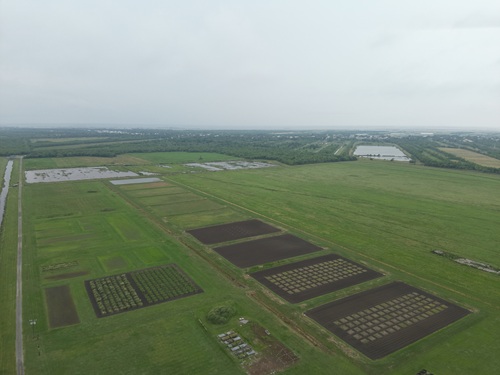
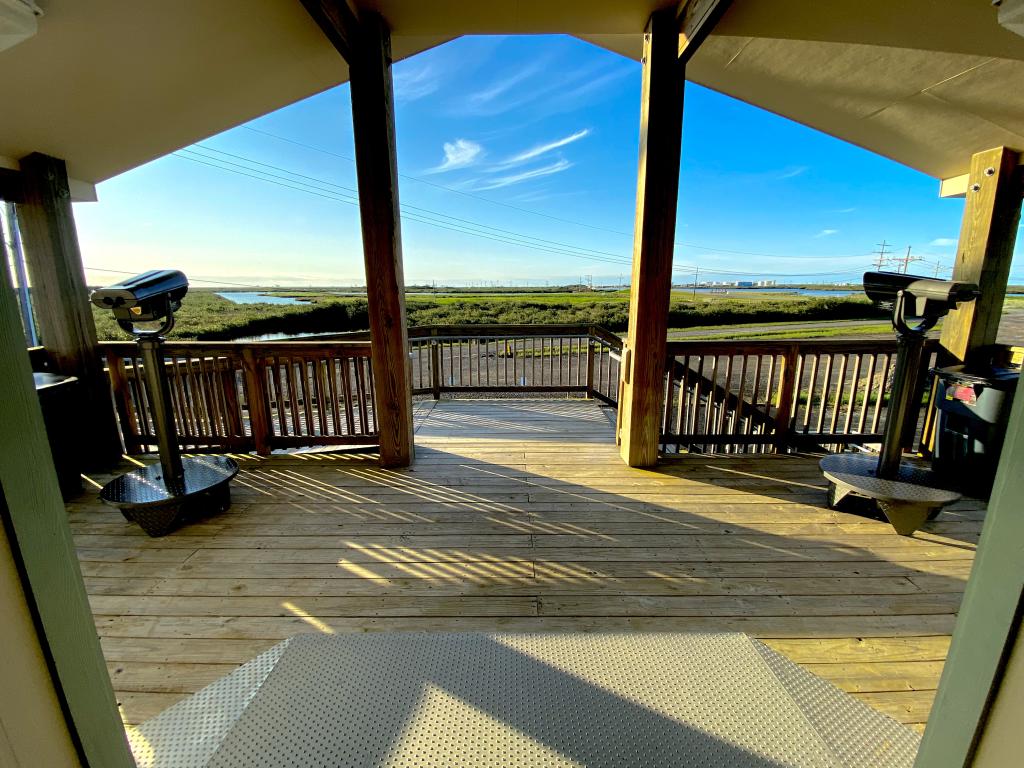
A recent addition to Port Fourchon is the Coastal Wetlands Park, more than 100 acres of purpose-built wetlands designed to fulfill developmental, environmental, education and recreational needs. This Holistic Resiliency mindset highlights how industry and the environment can and do work very well together.
Port Expansion
Port Fourchon is comprised of 1,300 acres of developed land. Currently, there are over 88,000 linear feet of bulkhead available, housing state-of-the-art service facilities.
If you combine offshore energy service capabilities for all other ports along the Gulf, Chiasson says, “They would comprise only 25 percent of the capabilities that Port Fourchon and its tenants can provide. No one else can match the services that our tenants offer. Our ability to provide full service to offshore energy is huge. If fact, we service 100 percent of all deepwater explorations and production assets in the Gulf.”
The advantages that have made Port Fourchon the premier port for deepwater energy is its exceptional location that allows easy access for all types of cargo, whether containerized or breakbulk, export or import.
Goods can be trucked to or from any point in the U.S. within three days.
Before being transferred to or from an offshore supply vessel, about 30 percent of total tonnage travels to and from the port by inland barge and 70 percent travels to and from the port by vehicle or helicopter.
To help speed things along, U.S. Customs and Border Protection maintains a presence in Port Fourchon, and vessel agency services and custom house broker services also are available to help with cargo requirements.
The combination of convenient assistance, experienced labor, transloading, and competitive rates makes Port Fourchon efficient and economical for shipping.
The port also offers multiple dry dock facilities for maintenance and repair on any vessel.
Deepening the Channels
Among the projects soon to take place is a deepening of the channels at Port Fourchon. The main channel, Belle Pass, currently is 27 feet deep, with the center channel 300 feet wide. The port has conditional authorization to go to 30 feet (plus 3 feet of advanced maintenance to 33 feet).
“We should be dredging by the end of this year,” Chiasson says. “In the meantime, we’re in the process of doing a feasibility report to eventually go to 50 feet in our main channel, due to the need for a deeper draft for a likely LNG conversion terminal. Congressional Authorization is anticipated in late 2028.”
On the west bank of Belle Pass, on a 900-plus acre site, Argent LNG is developing a major liquified natural gas (LNG) export facility, positioned to deliver reliable energy to global markets. Argent is expected to begin LNG exports in 2030, at a rate of 25 MTPA (million tons per annum). “This is truly exciting — a potential $20 billion project for our area,” notes Chiasson.
On the east bank is the Fourchon Island development project, which will provide a central location for servicing deep draft vessels, final assembly and load out of energy related project cargo, and the decommission of exiting and minor fabrication of future offshore facilities.
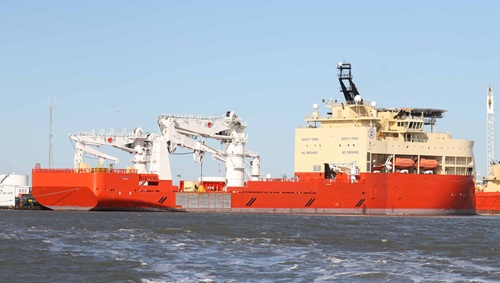
“We have some tenants already on site, but we still have plenty of room to build out Fourchon Island,” Chiasson says.
Air and Land Transportation
But it’s not all about the port. Nearby is the South Lafourche Leonard J. Miller, Jr. Airport, which was acquired by the GLPC in 2001 from Lafourche Parish Government and continues to grow to meet the demand of the port and the area, including a new $4.5 million terminal building and plans to strengthen and expand the current 6,500-foot runway.
About 11,000 people fly in and out of the airport every month — many are energy exploration and production employees traveling to and from facilities. A search and rescue operation also is based at the airport.
Surrounding the airport is about 1,200 acres slated for industrial development. There are shovel-ready certified sites currently available that are perfect for businesses that need to be near the port, but not necessarily at the port. The north site has 132 acres available and the south site, 166 acres.
“These certified sites can be used in a variety of ways — for light manufacturing, storage, assembly, etc.,” Chiasson says. “It’s all about location and access, which is even more efficient now with our new airport access bridge and connector road.”
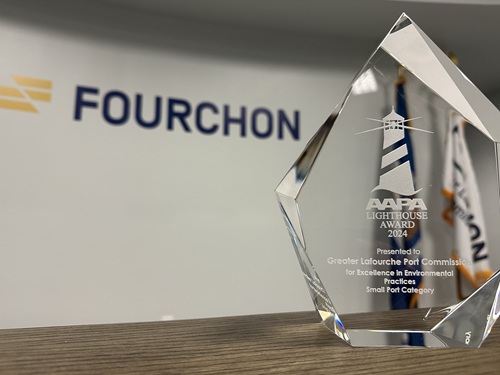
Louisiana Highway 1 is the sole land route to Port Fourchon and the barrier island Grand Isle, and it’s a federally designated High Priority Corridor, deemed critical energy infrastructure.
The first phase of the LA 1 Project, resulting in 11 miles of elevated highway, along the sections most vulnerable to flooding, has been completed, and currently another 9 miles are fully funded and under construction, with anticipated completion in late 2027.
Back in 1960, Louisiana State Senator A.O. Rappelet saw the potential of locating a port at the mouth of Bayou Lafourche, to lure the banana trade from New Orleans. Never could he have dreamt that this port would achieve what it has through the years.
Related Agencies
About the Author
There are no comments
Please login to post comments