
Even in Maryland's dense and formidable life sciences corridor, the news was a big deal: AstraZeneca, the global pharmaceutical giant, was broadening its manufacturing capabilities in the state, expanding an existing biologics facility and launching a new clinical manufacturing center.
The planned investment? Two billion dollars, making it the largest private capital investment the state had seen in more than a decade. Public officials, including U.S. senators and representatives, and leaders from Frederick and Montgomery Counties, celebrated.
The Realization of a Vision for the Future
But while the announcement was clearly a major win for the state, to those paying attention it was neither a surprise nor a lucky break. The decision was an easy one for AstraZeneca. It was inevitable, and the natural result of years of sustained effort.
“This is a realization of a much larger vision,” Maryland Governor Wes Moore said on the day of the AstraZeneca announcement in November 2025. Nearly a year earlier, Moore identified that life sciences was one of Maryland’s lighthouse sectors, an economic focus area where the state’s numerous assets positioned it for major success and growth.
Moore continued, “There is no reason for the global head of life sciences NOT to be in the State of Maryland.”
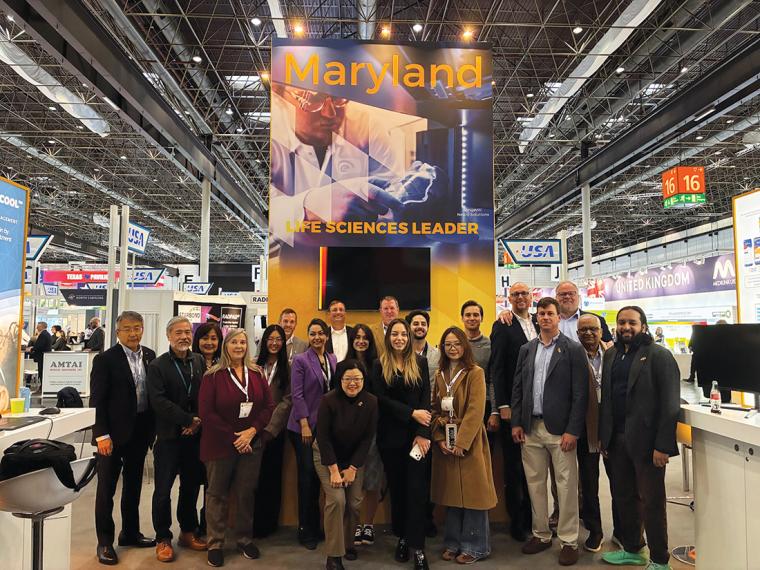
For decades, Maryland has steadily built one of the strongest life sciences ecosystems in the United States. Now, the state has emerged as a national leader in biotechnology, biomanufacturing and medical innovation — attracting major global companies, producing breakthrough research and developing the workforce needed to support the next generation of healthcare technologies.
AstraZeneca’s new facility is just one example. Recent announcements from Samsung Biologics, Syngene International and Nature Cell, among others, show that Maryland is a powerful and growing launchpad for the future of medicine.

An Unmatched Research Ecosystem
That strength begins with Maryland’s unmatched research ecosystem. The state is home to or closely connected with institutions such as the National Institutes of Health (NIH), the Food and Drug Administration (FDA), the National Institute of Standards and Technology (NIST), Johns Hopkins University and the University of Maryland system.
The “life sciences corridor,” which stretches up I-270 from Bethesda through Rockville and into Frederick, is home to one of America’s premier biotechnology clusters. Montgomery County alone hosts more than 350 life sciences companies, creating a dense network of scientists, clinicians, entrepreneurs and regulatory experts.
That proximity gives Maryland companies direct access to federal laboratories, clinical research institutions, investors, regulators and a skilled, experienced talent pool. Since innovation and speed are so critical to the life sciences, those connections can accelerate research, product development and commercialization.
Maryland is also a top state for federal research and development spending. Funds from NIH flow into universities, hospitals, startups and private companies to help fuel continuous innovation.
AstraZeneca’s investment reflects broad trends across the pharmaceutical industry, with companies increasingly focused on strengthening domestic manufacturing capacity, improving supply-chain resilience and locating facilities near highly skilled talent.
Maryland offers all three.
A Growing Role in Advanced Biologics Production
AstraZeneca already maintained major research and development operations in Gaithersburg; the Frederick expansion is expected to nearly double commercial manufacturing capacity at the site, reinforcing Maryland’s growing role in advanced biologics production.
Maryland’s global reputation received another boost in December 2025 when Samsung Biologics announced Rockville, in Montgomery County, would be the site of the company’s first U.S. manufacturing facility. The South Korea-based company, one of the world’s leading contract development and manufacturing organizations serving pharmaceutical companies worldwide, acquired a biologics manufacturing site previously operated by GSK.
“The investment will enable us to deepen our collaboration with federal, state and local stakeholders to best serve our customers and partners while ensuring a reliable and stable supply of life-saving therapeutics,” said Samsung Biologics CEO and President John Rim. “This marks an important step forward in our mission to achieve a better life through biomedicines.”
Of course, large-scale manufacturing operations like these don’t just grow the economy through direct employment; investments generate demand for suppliers, logistics companies, engineering firms and specialized service providers throughout the region.
Equally important, the investments from AstraZeneca and Samsung Biologics signal to the global industry that Maryland is an international competitor when it comes to attracting advanced biopharmaceutical manufacturing.
The state’s growth is not limited to pharmaceutical giants. Maryland is also attracting emerging and international biotechnology companies focused on advanced therapeutics and research services.
In 2025, India-based Syngene International announced plans to establish a biologics manufacturing facility in Baltimore as part of its U.S. expansion strategy. The new site will expand Syngene’s total bioreactor capacity, further supporting monoclonal antibody (mAb) production, discovery and manufacturing. It will also enhance customer supply chain continuity by integrating with Syngene’s existing development and manufacturing sites across India and North America.
“We are very pleased to start our U.S. manufacturing operations in Maryland…the state-of-the-art biologics facility will complement our India-based operations and increase Syngene’s total single-use bioreactor capacity,” said Syngene International Managing Director and CEO Peter Bains. “Maryland is one of the leading biopharma clusters in the U.S., and we are excited to contribute to this vibrant ecosystem and the region’s economy.”
Maryland’s ecosystem is particularly attractive to emerging biotech companies because it combines scientific expertise, regulatory access, clinical research infrastructure and investment support within a concentrated geographic area.
Not long after Syngene’s announcement, South Korea-based Nature Cell announced plans to expand its presence in Maryland, adding momentum to the state’s growing leadership in regenerative medicine and stem cell technologies.
Explaining why his company chose Maryland, Nature Cell Chairman Dr. Jeong-Chan Ra cited strong business support from Maryland and Baltimore City, including “dedicated engagement from their government team.” He also noted that the region’s highly collaborative industry and academic network, anchored by world-class institutions such as Johns Hopkins University School of Medicine and its affiliated hospitals, are central to advancing stem cell research and development.
While research institutions and corporate investment are essential, Maryland’s greatest long-term advantage may be its talented and highly educated workforce.
The state produces graduates from institutions including Johns Hopkins University, Morgan State University and the University System of Maryland, while also benefiting from experienced professionals working in federal laboratories, healthcare systems and biotechnology companies.
Workforce Development for Sustained Industry Growth
To sustain industry growth, Maryland has increasingly invested in workforce development initiatives tailored to the needs of the state’s employers.
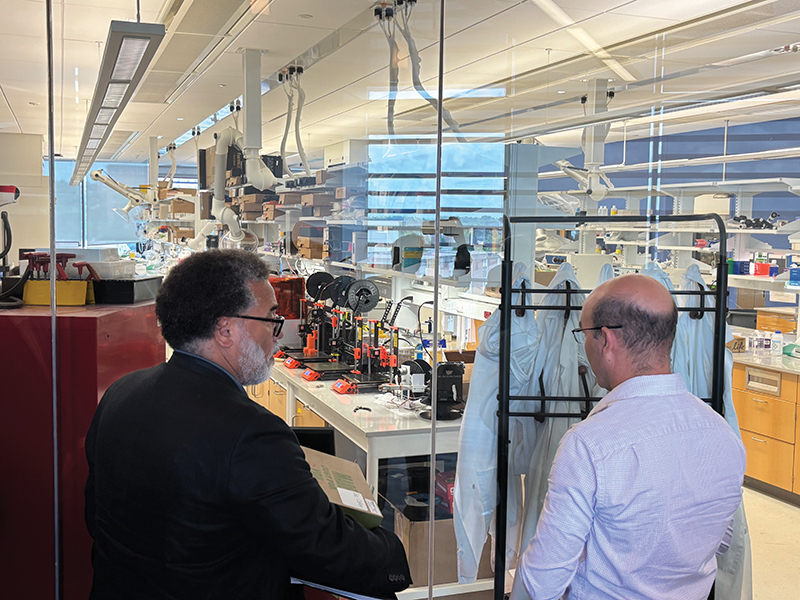
Montgomery College, one of Maryland’s network of 16 community colleges, offers a pair of unique biotechnology workforce training partnerships. BioTrain is a sector partnership of biotechnology companies, government and nonprofits led by Montgomery College to provide short lectures, workshops and hands-on training – all taught by industry experts and free of cost. Bio-Trac offers graduate- and post-graduate-level hands-on laboratory training workshops for new research scientists taught by active research scientists and innovators from leading research institutes and private industry.
One of the most important recent efforts has come from BioHub Maryland, a statewide life sciences workforce collaborative focused on expanding technical training and career pathways. An initiative of the Maryland Tech Council, BioHub Maryland’s workforce programs are aimed at strengthening Maryland’s pipeline of laboratory and biomanufacturing talent. Central to that effort is the organization’s Montgomery County training center, which provides hands-on instruction aligned with the needs of biotechnology employers.
“[This] investment enables job seekers of all educational backgrounds to gain in-demand biopharma skills in a cutting-edge training environment while providing employers the skilled workforce they need to advance the medical innovations that patients around the world depend on,” said Montgomery County Executive Marc Elrich when the facility opened in 2024.
The training center reflects broader changes taking place across the life sciences industry. As biologics manufacturing and cell therapy production become more sophisticated, companies require specialized technical workers with advanced laboratory and manufacturing skills.
Maryland’s rise as a life sciences leader is the result of decades of investment in research, education, infrastructure and collaboration between government, academia and industry.
Companies increasingly want locations where research, manufacturing, talent and regulatory expertise exist within a single ecosystem. Maryland offers precisely that combination. As biotechnology continues to transform medicine, Maryland is one of the leading architects of that future. T&ID