
Industrial projects are becoming more complex. Rising costs, workforce constraints, and infrastructure demands mean companies are taking a harder look at where—and how—they expand. Increasingly, the differentiator isn’t just location. It’s readiness.
Sites that are truly ready are rare. And they don’t happen overnight.
In Okmulgee, Oklahoma, that preparation has been underway for years. The Okmulgee Business Complex (OBC), a former refinery site, represents a long-term commitment to repositioning legacy infrastructure for modern industrial use. Environmental remediation, rail development, and infrastructure investment have all been part of that process. Rail access is in place today and can be extended or customized based on end-user needs, with additional improvements continuing to move forward.
This kind of work is not always visible, but it is essential. It reflects a deliberate approach to site development—one that prioritizes long-term usability over short-term promotion.
Location remains an important part of the equation. Okmulgee sits within the Tulsa metropolitan area labor shed, providing access to a broader regional workforce while maintaining the cost and flexibility advantages of a smaller community. With proximity to major highways, including U.S. Highway 75, and access to regional logistics networks, the community offers connectivity without many of the constraints found in larger markets.
At the same time, workforce alignment has been a parallel priority. Partnerships with OSU Institute of Technology (OSUIT), Green Country Technology Center, and initiatives such as Work Ready Okmulgee—supported through statewide efforts like Workforce Oklahoma—are focused on connecting training with real employer needs. The goal is not just workforce availability, but workforce readiness.
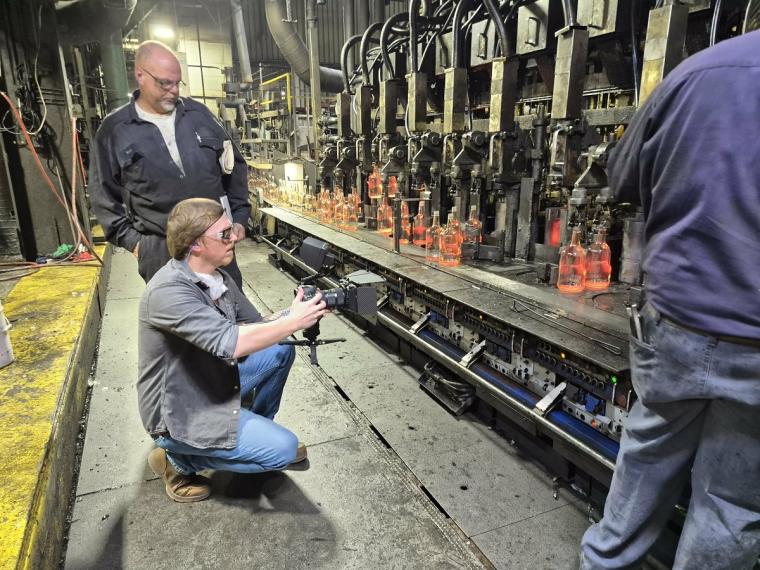
That approach is reflected in continued investment from existing industry. Okmulgee is home to 15 manufacturing employers, several of which have expanded operations in recent years—representing over $300 million in capital investment. Those projects vary in size and scope, but collectively they demonstrate something important: the ability of a smaller community to support complex industrial growth.
That kind of track record matters. For companies evaluating potential locations, it provides a level of confidence that goes beyond projections or plans.
Industrial readiness is not the result of a single project or initiative. It is built over time—through infrastructure investment, workforce development, and the ability to follow through when opportunities arise.
As manufacturers continue to evaluate cost, logistics, and workforce considerations, communities that have taken this long-term approach are beginning to stand out. Okmulgee is one of them—not because it is trying to be something it’s not, but because it has done the work to be ready.
There are no comments
Please login to post comments