
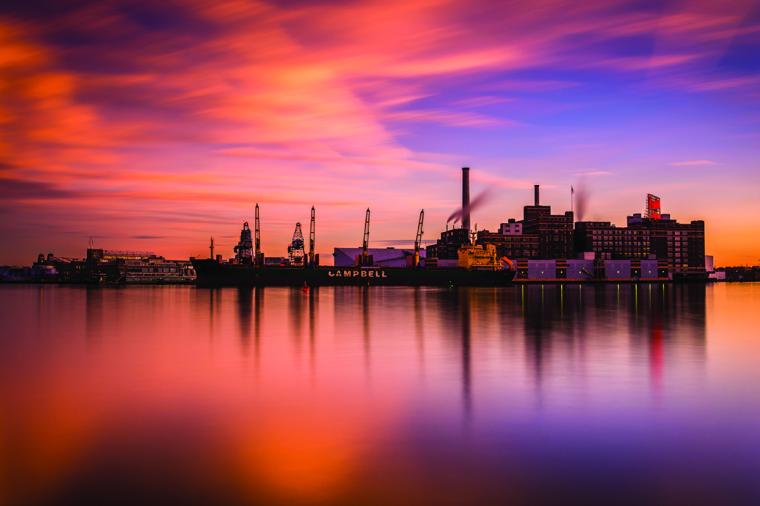
Port of Port Arthur, Texas
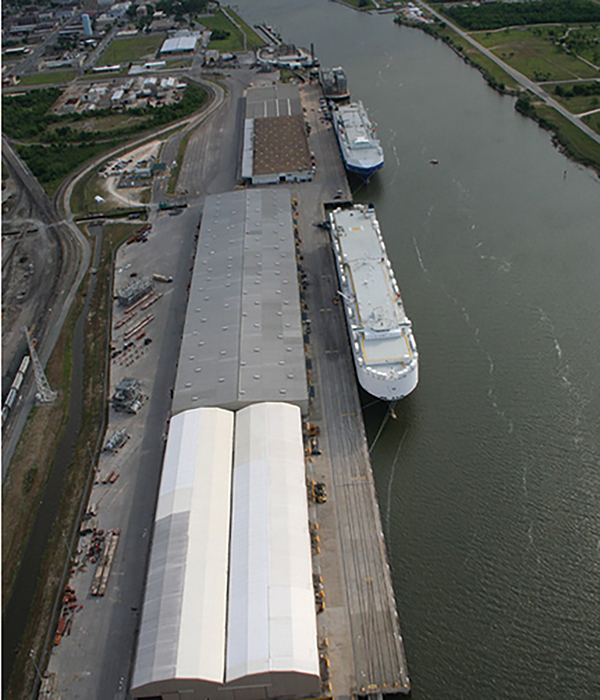
The Port of Port Arthur is recognized as one of North America’s premier direct transfer facilities for international cargo shipping. Strategically located on the Gulf of Mexico, the port offers efficiency, moving cargo from sea to transit in less than two hours. The port, which is19 miles from the Gulf of Mexico with 24-hour channel and dock accessibility, is located on the Sabine Neches Waterway and reaches global markets, importing and exporting forest products, metals, project cargo and military cargo. It offers 24-hour channel and dock accessibility.
The Port is located midway on the barge shipping routes of the intracoastal waterway that extends from St. Marks, Florida to Brownsville, Texas. The Sabine-Neches Ship Channel is part of that system, with channel depths to safely accommodate large petrochemical tankers and cargo ships. The port is connected to the KCS Railroad, providing direct rail services originating from or destined for North American markets. Through reciprocal switching and trackage rights, the port handles cargo connections to the east with NS Railroads, and to the west and northwest with UP and BNSF Railroads. Tex Mex and TFM extends its services into Mexico.
Port properties are available for lease with flexible terms designed to meet the needs of various industries. Services include warehouse space, laydown yards and development-ready parcels with convenient access to water, rail and highway infrastructure.
Port of Baltimore, Maryland
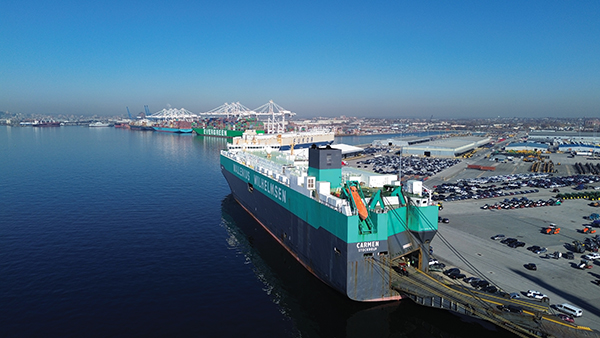
In 2025, the Helen Delich Bentley Port of Baltimore’s state-owned public and private marine terminals set new records for total cargo vessel visits and container activity. The record year follows the port's historic recovery in 2024 following the Francis Scott Key Bridge collapse—an achievement made possible by the coordinated effort to clear the Fort McHenry shipping channel into the Port of Baltimore.
“The Port of Baltimore is a cornerstone of Maryland’s economy and one of the most important ports in the country,” said Maryland Governor Wes Moore. “We are grateful to the workers whose unwavering commitment and resilience made this progress possible. Our administration will continue to promote our port’s infrastructure to strengthen our supply chains, drive economic growth in our state, and create more good-paying jobs for our people.”
The Port’s state-owned public marine terminals, along with its private terminals, handled 2,223 cargo vessel visits in 2025, surpassing the previous record of 2,137 ships set in 2023. The 2025 total represents a 21 percent increase over 2024.
“Our incredible terminal operators, International Longshoremen’s Association labor force, truckers, freight forwarders, and our other valued business and supply chain partners deserve full credit for a successful 2025 for the Port of Baltimore,” said Maryland Port Administration Executive Director Jonathan Daniels. “We have exciting things on tap for 2026 and look forward to an even more productive year.”
A new record of 1,113,309 twenty-foot equivalent units were moved through Baltimore's Seagirt Marine Terminal last year, exceeding the 2023 record by more than 5,000. This coincided with an increase in weekly container services—regular, scheduled vessel routes—from 12 in 2024 to 15 in 2025.
The Port’s container business is expected to grow further with the 2026 completion of the CSX Howard Street Tunnel Project, a $518 million initiative to modernize a 130-year-old freight tunnel in Baltimore. The new freight tunnel will allow the port to accommodate double-stacked container trains, increasing the Port’s capacity, while increasing competitiveness with regional ports—expanding potential business opportunities. The project is expected to increase the Port’s business by approximately 160,000 containers annually and generate nearly 14,000 jobs.
Port of Greater Baton Rouge, Louisiana
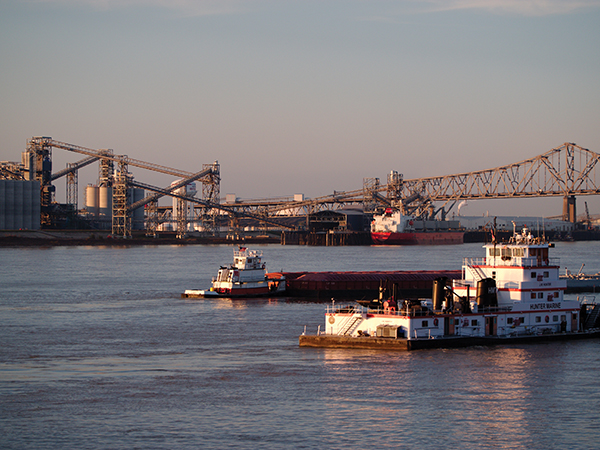
Located in Port Allen, Louisiana, the Port of Greater Baton Rouge is situated at the convergence of the Mississippi River and the Gulf Intracoastal Waterway and is linked to other major ports between north Florida and south Texas and through the Mississippi River inland waterway system.
The Port of Greater Baton Rouge is the tenth largest port in the U.S. in terms of tonnage shipped and is the northernmost port on the Mississippi River capable of handling Panamax ships. It includes a deep-water complex on the Mississippi River capable of handling oceangoing vessels. The shipping channel is maintained at approximately 45 feet. The port has multiple specialized terminals, including grain elevators, liquid-bulk (petroleum, molasses, chemicals), coal/coke handling, general cargo docks and a dedicated inland-river (barge) terminal.
The Port of Greater Baton Rouge provides excellent accessibility to all types of intermodal transportation. It is located adjacent to U.S. Interstate 10 and is in close proximity to U.S. Interstate 12, 49, 55 and 59; U.S. Highway 61, 65 and 90 and LA Highway 1.
The port’s excellent public infrastructure and connectivity provide direct access to ship, barge, truck and rail. Its strategic location provides ready access to the nation’s heartland via nearly 15,000 miles of inland water transportation as well as to the Gulf of Mexico and ocean trade lanes to and from Latin America and the rest of the world.
Port of Lake Charles, Louisiana
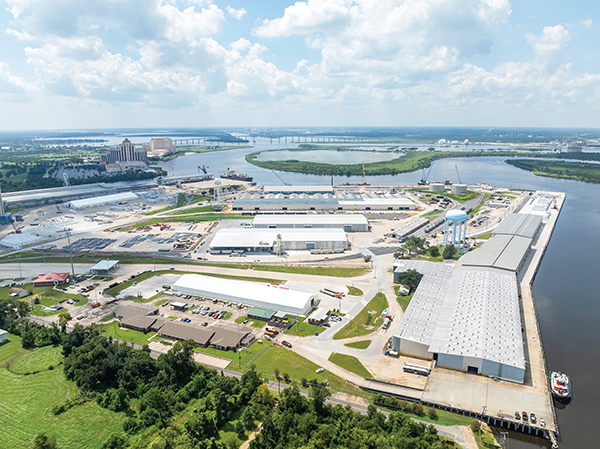
The Port of Lake Charles (officially the Lake Charles Harbor & Terminal District) is a major deepwater seaport in Southwest Louisiana, centered on the Calcasieu Ship Channel. Covering about 203 square miles, the channel stretches some 36 miles inland and another 32 miles to the Gulf, providing direct ocean access.
In 2022 to 2024, the port handled more than 64 million short tons of cargo. Among its standout facilities are 15 public berths, eight private berths and two high-capacity ship loaders — one of which moves bulk materials at 3,200 tons per hour.
The port specializes in breakbulk, project, heavy-lift and energy cargo, especially LNG. Economically, it’s a powerhouse: the Calcasieu Ship Channel supported $83.4 billion in U.S. economic value in 2024, underpinning more than 300,000 jobs.
A major upgrade was recently made at Bulk Terminal No. 1 with the installation of a new ship loader. The addition gives the terminal two high-capacity ship loaders, allowing simultaneous vessel loading and material transfer to trucks or railcars.
In addition, a new 180,000-square-foot warehouse is now open. It replaced seven smaller warehouses built in the 1940s and 1950s at a cost of more than $30 million. The facility includes two truck docks and a rail dock, boosting storage capacity and operational flexibility.
Process Service Specialists is constructing a $3.5 million manufacturing facility on 11 acres in the port’s Industrial Park East. The project is expected to create around 160 direct jobs, and will provide steel, piping and various industrial services to sectors such as petrochemicals, energy, semiconductors and solar.
A new LNG export project is valued at $17.5 billion, the largest single foreign direct investment in Louisiana’s history. It is planned as a three-train LNG facility with a total capacity of 16.5 million tonnes per annum (Mtpa).
Port Fourchon, Louisiana
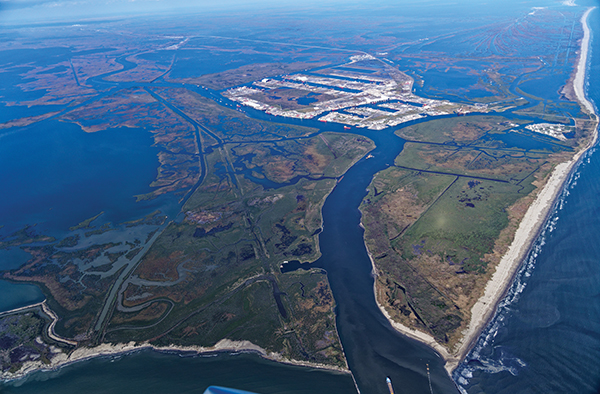
Port Fourchon is a multi-use deepwater port in Louisiana that serves as a vital hub for the U.S. offshore energy industry, handling 100 percent of the Gulf of America’s deepwater oil and gas activity. Its strategic location and specialized facilities make it an indispensable asset to national energy security, supplying up to 20 percent of the nation’s total oil. The port also supports commercial fishing, shipping, coastal restoration and ecotourism.
Port Fourchon is built on 1,700 acres of developed land with over 90,000 linear feet of waterfront property. Each year, port tenants handle approximately 20 million tons of energy-related cargo. It supports around 270 large supply vessel transits daily. As of 2024, the offshore energy industry at Port Fourchon created a $3.4 billion economic impact in Louisiana and generated $657 million in household earnings, with 80 percent of earnings staying within the local community.
Currently, the port is in the final phase of its Northern Expansion project, which has more than doubled its size. A major rig repair facility is also part of this expansion. In 2025, the Greater Lafourche Port Commission acquired a 743-acre tract from the State of Louisiana to facilitate Argent LNG’s expansion of its $20 billion liquefied natural gas export facility. This will allow Argent to scale its production capacity, with construction of Phase One slated for 2027 and commercial operation by 2030.
In addition, the Port Commission is working to dredge Belle Pass to 50 feet to accommodate a new deepwater port facility expansion. Ongoing construction is underway to elevate Louisiana Highway 1, the port’s only access road, to prevent flooding and improve access for the numerous trucks that serve the port daily.
Port Fourchon is poised for a robust future, according to Greater Lafourche Port Commission Executive Director Chett Chiasson.
“Port Fourchon’s importance cannot be understated, as it plays the most prominent of roles in supporting the nation’s energy supply chain thanks to being the leading service base for deepwater oil and gas activity in the Gulf of America,” said Chiasson. “Through the amazing efforts of our tenants, users and Board of Commissioners, and every level of government, this distinction will continue to be built and improved upon in the years to come.”
Ports of Indiana
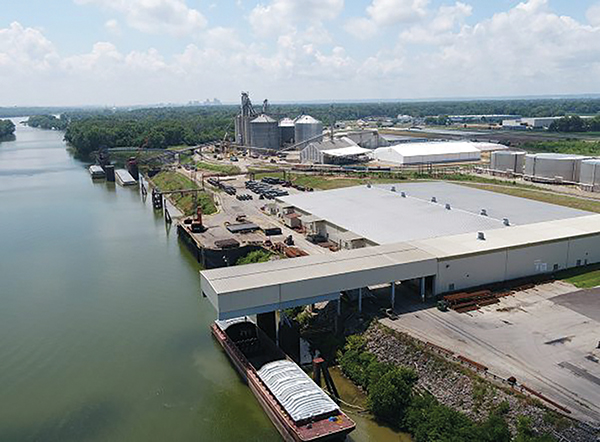
The Ports of Indiana is a statewide port authority with three facilities: one on Lake Michigan (Burns Harbor) and two on the Ohio River (Jeffersonville and Mount Vernon). Ports of Indiana is a self-funded enterprise dedicated to growing Indiana’s economy by developing and maintaining a world-class port system and by serving as a statewide resource for maritime issues, international trade and multimodal logistics. Ports of Indiana annually contributes $8.7 billion to the state economy and supports approximately 50,000 jobs.
The ports offer multimodal connections, including rail yards, and have partnered to improve the loading and unloading of cargo between trains and barges. The ports handle a variety of cargo, including steel, agriculture products, fertilizer and ethanol. The ports are the first statewide port authority to be Green Marine Certified.
In late 2025, Ports of Indiana was awarded two federal grants from the Federal Emergency Management Agency (FEMA) to strengthen security infrastructure and assessment capabilities at its Burns Harbor and Jeffersonville ports. The FEMA Port Security Grant Program provides funding to state and municipal entities to help protect critical port infrastructure from terrorism, enhance maritime domain awareness, improve port-wide maritime security risk management and maintain or reestablish maritime security mitigation protocols that support port recovery and resiliency capabilities.
Port of Port Angeles, Washington
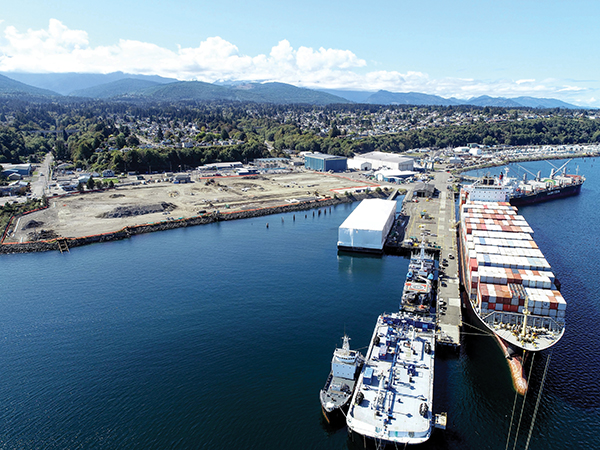
Located in the northwest corner of Washington State on the Strait of Juan de Fuca, the Port of Port Angeles serves the entirety of Clallam County, with the majority of facilities in and around Port Angeles. Facilities include two general aviation airports, seven marine terminals, two marinas containing a total of 700 slips, waterfront industrial area and industrial parks.
Port of Port Angeles’ location brings business and jobs to Clallam County by linking the region to domestic and international markets, including Canada’s forest products industry.
The Marine Trade Center, an 18-acre parcel of waterfront land, became available for lease and development by maritime businesses in 2025. Once developed, the Marine Trade Center is expected to create 461 new jobs, providing $17.6 million in new annual income and adding $1.3 million in tax revenue to local and state economies.
In October 2024, the port was awarded grant funds for 95 percent project funding from the Washington State Department of Transportation and the U.S. Environmental Protection Agency’s Clean Ports Program.
Port of South Louisiana
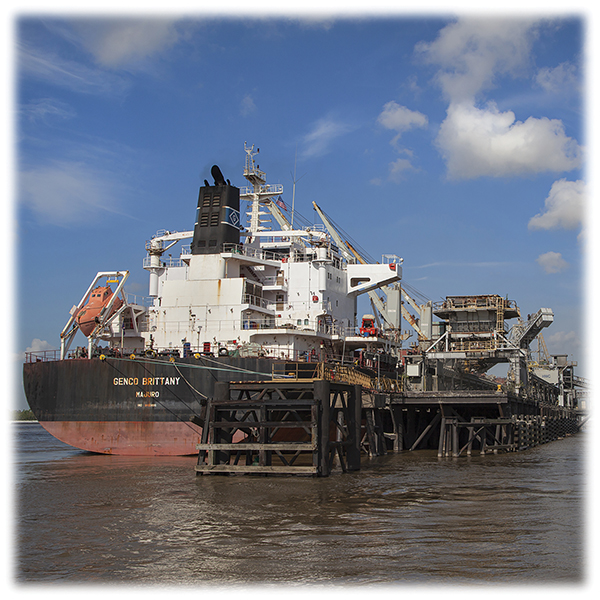
The Port of South Louisiana’s versatile, all-purpose combination of water, highway, rail, pipeline and air transportation is capable of meeting the needs of the most demanding manufacturer or shipper. The port stretches 54 miles along the Mississippi River and is one of the largest tonnage port districts in the western hemisphere. The Port of South Louisiana’s industrial partners line 108 miles along both the east and west banks of the Mississippi River. Each year, 248.1 million tons of cargo passing through the inland river system is handled by the Port of South Louisiana.
In terms of connectivity, the port features direct access to I-10 and I-55 and indirect access to I-12 and I-59. It is located 10 minutes from New Orleans’ Louis Armstrong International Airport, and the Port of South Louisiana’s Executive Regional Airport is located in the center of the port’s district. The regional airport offers air freight services and storage, including cold storage.
The port is served by three trunk line railroads. Twenty metro areas are located within 600 miles, including New Orleans; Jackson, Mississippi; Mobile, Alabama; Little Rock, Arkansas and Dallas and Houston, Texas. The port is also the terminus for the Louisiana Offshore Oil Port (LOOP), which provides 1.1 million barrels of crude oil per day, and the originating point for Capline, a 640-mile pipeline that carries an average of 1.3 million barrels per day to the Midwest.
Port of Virginia, Virginia Beach
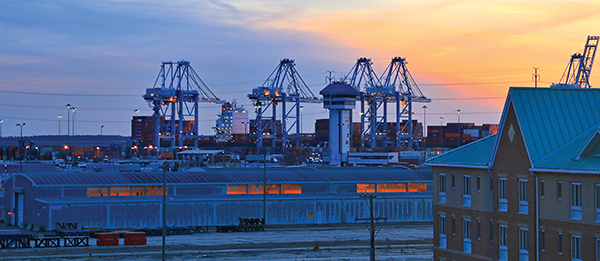
The Port of Virginia is a unique collection of six cargo terminals working in concert to move exports and imports to market by railroad, river barge and trucks. The port is built around the world’s largest natural deepwater harbor and currently stands as the third-largest container port on the East Coast. The port does more than service ships hauling cargo; it drives investment, job creation, revenue growth and connects Virginia to the world.
The Port of Virginia offers the deepest obstruction-free shipping channels on the East Coast. It is the only U.S. East Coast port with Congressional authorization for 55-foot depth channels, and it can accommodate 10,000+ TEU vessels. It offers direct service to more than 45 countries worldwide, and accommodates service offered by every major shipping line. The port provides fast and efficient on-dock rail connections to key inland markets and is within two-thirds of the U.S. population within a day’s drive.
In terms of sustainability, the port was the nation’s first to implement an ISO 14001-approved environmental standards program. In October 2024, the port announced that it is closer to its goal of eliminating all greenhouse gas emissions by 2040 thanks to a multimillion-dollar federal grant that will be used to buy electric equipment and the infrastructure needed to support it. T&ID