

High-quality infrastructure is the underpinning of any successful business climate. Infrastructure allows businesses to operate without interruption, enhances resilience, reduces operating costs and allows for quicker access to customers and suppliers.
Virginia has positioned itself as a trusted partner in a competitive business environment. Businesses can rely on the Commonwealth’s infrastructure to get materials and products to their destinations quickly, smoothly and without complications. CNBC ranked Virginia’s infrastructure as the second-best in the country in its 2025 Top States for Business ranking.
Virginia is home to one of the East Coast’s most efficient ports, four major cargo service airports, 12 freight railroads and more than 3,000 miles of freight rail, and some of the country’s most heavily traveled truck routes. Just as importantly, Virginia takes a proactive stance on investing in improvements in the essential travel corridors that keep businesses connected.
Investments Underpin Business Resiliency
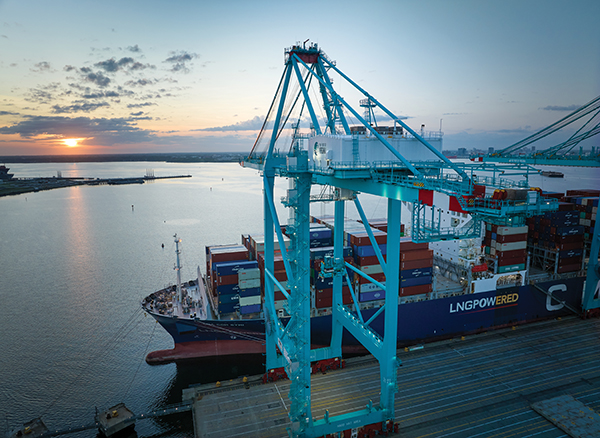
Investment Program, which included upgrades at Virginia International Gateway in Portsmouth. Photo provided by VEPD
The Virginia Department of Transportation (VDOT) currently has more than 4,500 active improvement projects across the state, including work to add travel lanes and make other improvements along Interstate 81, which carries nearly 50 percent of the Commonwealth’s value of goods. Another ongoing VDOT project is widening Interstate 64 between Richmond and the Hampton Roads region, enhancing connectivity with The Port of Virginia’s facilities in the area. From that port, users can reach three-quarters of the U.S. population within a two-day drive.
“That’s a significant improvement over what that corridor looked like 10 years ago,” said John Phifer, chief financial officer at Massimo Zanetti Beverage USA, which built a state-of-the-art distribution facility in Suffolk in 2021. He added that without the port’s reliable service and partnership, his company “couldn’t run a business of our scope and scale.”
The port has made its own upgrades, including an $83 million expansion of its railyard, part of its $1.4 billion Gateway Investment Program, which increased its twenty-foot equivalent (TEU) capacity by 31 percent. The port continues to work on its dredging initiative, which will deepen the shipping channel to 55 feet and the ocean approach to 59 feet to accommodate two-way traffic for ultra-large container vessels.
The $450 million project is expected to finish in early 2026 and will give the port the deepest, widest channels on the East Coast. The port also partnered with Norfolk Southern Corporation to create the country’s first RailGreen Corridor, which offers daily service from its Norfolk Harbor Terminals to the Virginia Inland Port (VIP) in Warren County using low-carbon biofuel.
The port is positioning itself to capitalize on market trends, according to Russell Young, vice president of Port Centric Logistics at the port. He has observed West Coast companies diversifying their supply chains to better serve markets east of the Mississippi River, while northeast companies are establishing centralized facilities in Virginia to more efficiently reach southern and midwestern markets.
One reason the port has drawn this business is “the Virginia model,” in which the Virginia Port Authority owns and operates its terminals, allowing for faster decisionmaking and increased customer responsiveness than traditional landlord-operated alternatives.
“The fact that they’re so reliable means we can focus on other things that need to be improved within our own walls,” said Michael Ward, director of supply chain at STIHL, Inc. in Virginia Beach.
At the other end of the Commonwealth, Washington Dulles International Airport is positioning itself to support increased business and cargo capacity.
Dulles has received $35 million in federal grants to construct a new 14-gate terminal and is planning an additional runway and a $700 million United Airlines concourse that will open in 2026, with the Metropolitan Washington Airports Authority planning to invest $9 billion in airport infrastructure at Dulles and Ronald Reagan Washington National Airport over the next 15 years.
With an advantageous location convenient to the federal government in Washington, D.C. and easy access to other East Coast and Midwest markets, Dulles is poised to handle an increase in cargo service above the 300,000 tons it currently handles each year.
A Warehousing Powerhouse
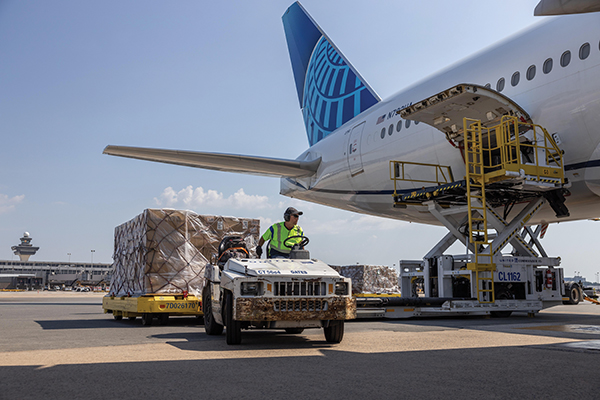
The improvements at Dulles and the port are matched by a thriving Virginia warehouse ecosystem that is particularly strong in cold storage. That is a major consideration for pharmaceutical companies, particularly important at Dulles, and for the food and beverage processors a couple of hours away in the Shenandoah Valley and further south at the port’s Hampton Roads terminals. Food and beverage companies in both regions make use of the VIP, from where they’re moved efficiently to value-added processors along the I-81 corridor and then quickly out to market.
Manufacturers and users of non-perishable goods have just as much of a place in Virginia, with more than 34 million square feet of new and expanded warehouse space announced in the Commonwealth in the last three years, totaling more than $6 billion in investment — much of it proactive.
“Clearly, the state has made some pretty aggressive investments in advance of these industries needing to build out those ecosystems,” said Joe Dunlap, founder of supply chain consulting firm BlueJ Advisors and a supply chain industry veteran with a decade-long stint at CBRE.
Virginia has made strategic policy decisions that have helped in landing and completing those facilities. When building warehouses and other facilities, companies are looking for certainty regarding permitting, utilities and infrastructure.
The Commonwealth has responded to those needs with programming like the Virginia Business Ready Sites Program, which assesses and advances the readiness of potential industrial sites, and the Virginia Business Ready Expedited Permitting Program, which expedites the permitting process for transformational economic development projects. Streamlining the site selection and permitting processes eliminates what can be major contributors to delays for important projects, supporting Virginia’s efforts to increase speed to market for larger sites.
Looking to the Future
Port leadership is also focused on intermodal and multi-modal capabilities to serve shippers most effectively. Rail transport, as part of a multi-modal transport strategy incorporating maritime, road and air, serves as a method of balancing competing shipping and inventory considerations.
Over-reliance on air freight, while efficient, can drive up costs, and the ability to flex between different modes of transport helps companies to navigate delays and maintain a seamless flow of products.
Virginia continues to work to position itself as a key hub in a potential new transcontinental railroad that could emerge after Union Pacific Corporation’s acquisition of Norfolk Southern Corporation, announced in July 2025 and currently under U.S. Surface Transportation Board review.
Virginia’s port facilities, both around Norfolk Harbor and elsewhere, enable companies to take advantage of multi-modal capabilities. The port’s terminals rely on rail access and proximity to major highways to move goods on to their destinations, while the Richmond Marine Terminal’s James River barge service offers a maritime alternative to the Hampton Roads terminals. The VIP is strategically located to serve customers in the Washington, D.C. area and beyond, with frequent service between ocean and inland terminal connections.
Virginia’s mix of public and private investment, including The Port of Virginia and company-owned, interstate-adjacent freight processing operations, positions the Commonwealth as a complete gateway through which companies can reach suppliers and customers across the country and the world. T&ID
Related Agencies
Related FTZ Zones
About the Author